
Detector Installation Backed by Four Generations of St. Charles Trust
Smoke & Carbon Monoxide Detector Installation in St. Charles, MO
Detect & Protect with Precision
Every year, countless homes are jeopardized by the silent threats of smoke and carbon monoxide. Subtle yet dangerous, these hazards necessitate vigilant monitoring through reliable detectors. At J. Bathe Electric, we recognize the critical nature of these issues and offer specialized installation services for the best smoke and carbon monoxide detectors available, tailored to safeguard your family and home.
Our certified electricians possess extensive knowledge in detector installation, addressing common problems such as improper smoke detector placement or incessant beeping and chirping which often signal malfunctions. Whether you need new installations or upgrades to smarter systems like the smart smoke detector or integrated smoke and carbon monoxide detectors, our team sets up your equipment flawlessly and strategically.
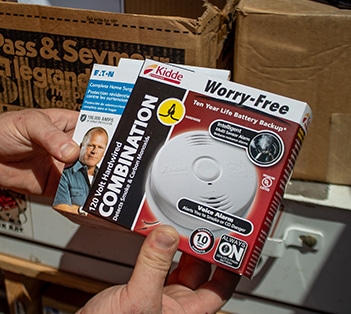
Hardwired Detector Systems Designed for St. Charles Homes
Off-the-shelf detectors handle the basics, but a system engineered for your specific home catches problems faster and triggers far fewer false alarms. Across more than 80 years serving St. Charles, MO, we’ve learned that ceiling height, HVAC placement, cooking appliances, and a home’s number of levels all affect where a detector should go and how sensitive it needs to be—and our electricians account for each of these before running a single wire.
Hardwired detectors, tied directly into your home’s electrical system with battery backup, offer a real advantage over battery-only units: they’re interconnected, so when one alarm sounds in the basement, every detector in the house sounds with it. That’s the standard required for new construction in St. Charles County, and it’s the upgrade we recommend most often when we find older homes still running on stand-alone battery units.
Our Smoke & Carbon Monoxide Detector Installation Process

Where Should Smoke and Carbon Monoxide Detectors Go?
Placement determines whether a detector catches a problem in time. Install smoke detectors inside every bedroom, in the hallway outside sleeping areas, and on every level, including the basement and stairway top—a typical three-bedroom, two-story home with a finished basement needs at least seven. Mount them on the ceiling or high on a wall, at least ten feet from cooking appliances and clear of HVAC vents.
Carbon monoxide detectors follow a different rule: St. Charles County code and NFPA 720 require a CO alarm within ten feet of every sleeping room in new or renovated construction with a fuel-burning appliance or attached garage. We recommend one CO detector per level for every home, regardless of code minimums.
Quality and Service Runs in the Family at J. Bathe Electric
Breathe Easy with Safe Detector Installation
FAQs About Carbon Monoxide & Smoke Detectors
Smoke detectors have a functional lifespan of 10 years from the manufacture date stamped on the unit—not the purchase date—after which the sensor degrades even if the alarm still passes a test-button check. Carbon monoxide detectors typically last 5 to 10 years depending on the manufacturer, so check the date stamp on your unit or the owner’s manual for the exact figure. During a service call, we check the manufacture date on every detector in your home and flag any unit that’s due for replacement, whether or not it’s currently sounding an alert.
The placement of smoke and carbon monoxide detectors is critical for effective operation. Smoke detectors should be installed on every level of your home, inside each bedroom, outside sleeping areas, and in the kitchen. Carbon monoxide detectors are best placed near sleeping areas and according to the manufacturer’s instructions to guarantee proper functionality.
Smoke detectors need to be installed inside every bedroom, in hallways or common areas outside each sleeping area, and on every level of the home, including a finished basement and the top of each stairway. Carbon monoxide detectors should be installed within 10 feet of every room used for sleeping, per NFPA 720 and St. Charles County’s adopted building code for new and renovated construction. Mount smoke detectors on the ceiling at least 4 inches from a wall, or on a wall between 4 and 12 inches below the ceiling, and keep them at least 10 feet from cooking appliances to reduce false alarms.
Testing the button monthly confirms the alarm sounds, but it doesn’t confirm the sensor itself is still accurate—a detector can pass a test-button check for years after its sensor has degraded past the point of reliably detecting smoke or CO. A professional inspection checks the manufacture date, sensor sensitivity, battery backup condition, and interconnection wiring, which is the only way to confirm a hardwired system will alert every part of the house when it matters.
A single chirp every 30 to 60 seconds almost always means a low battery, even on hardwired units with battery backup—replace the battery first. If the chirping continues after a fresh battery, the detector may be nearing the end of its 10-year lifespan, collecting dust inside the sensor chamber, or experiencing a wiring fault in an interconnected system. Persistent beeping that doesn’t resolve with a battery swap is a sign the unit needs professional evaluation, not just another battery.
A carbon monoxide detector beeping intermittently is signaling a low battery or an end-of-life warning—replace the battery or the unit, and don’t ignore it. A carbon monoxide detector sounding a continuous, loud alarm means the sensor has detected CO at a level requiring immediate action: leave the house, get everyone and any pets into fresh air, and call 911 or your gas utility’s emergency line from outside the home. Don’t re-enter until emergency responders confirm the air is safe, and have an electrician inspect the detector and your home’s fuel-burning appliances before resetting the alarm.
Cost depends on how many detectors you need, whether they’re hardwired or battery-operated, how many circuits require interconnection, and whether your existing wiring can support additional units or needs upgrading first. A single detector replacement is generally the least expensive option; a whole-home hardwired, interconnected system for a new addition or a full compliance upgrade costs more due to the wiring and circuit work involved. We provide a firm, itemized quote after an in-home walkthrough, so you know the total cost before any work begins—request a quote here.
At minimum, one inside every bedroom, one in the hallway outside each sleeping area, and one on every level of the home, including the basement—a typical three-bedroom, two-story home with a finished basement needs at least seven. Larger homes, additional stories, finished attics, and open floor plans without hallway separation typically need more. A walkthrough is the most reliable way to get an exact count for your specific layout.
Yes. We inspect existing detectors regardless of who installed them, confirm whether they’re hardwired or battery-only, check the manufacturer’s date, and replace or upgrade any unit that’s outdated, incorrectly placed, or no longer interconnected with the rest of the system.
Missouri has no statewide law requiring carbon monoxide detectors in existing homes, but St. Charles County’s adopted building code requires a hardwired CO alarm with battery backup, installed within 10 feet of each sleeping room, in new construction and renovated homes with a fuel-burning appliance or attached garage. Rental properties are also subject to separate state smoke alarm requirements. If you’re unsure whether your property is in compliance, we can evaluate your current setup against the applicable code.
Protect Your Home Before a Missed Alarm Does the Damage
A smoke or carbon monoxide detector that’s missing, disconnected, or past its 10-year service life isn’t a maintenance item you can put off until next season—it’s the one piece of equipment in your home that’s supposed to work the one time everything else has already gone wrong.
Whether you need a single hardwired replacement, a full detector system for a new addition, or a compliance check before selling or renting a St. Charles property, our licensed electricians can have your home fully protected in a single visit. Contact us to schedule your smoke and carbon monoxide detector installation, or explore our electrical services and commercial electrical services to see how we keep St. Charles homes and businesses running safely.