The Consumer Product Safety Commission estimates that 59% of non-fire CO deaths involving consumer products…
How a Smart Thermostat Can Lower Your Energy Bills and Upgrade Your Home
Heating and cooling account for roughly 45–55% of a home’s total energy spend, which makes your thermostat one of the most powerful tools you have for controlling monthly costs. If yours is still a basic programmable model, or worse, a manual dial, you’re likely leaving real money on the table every single month.
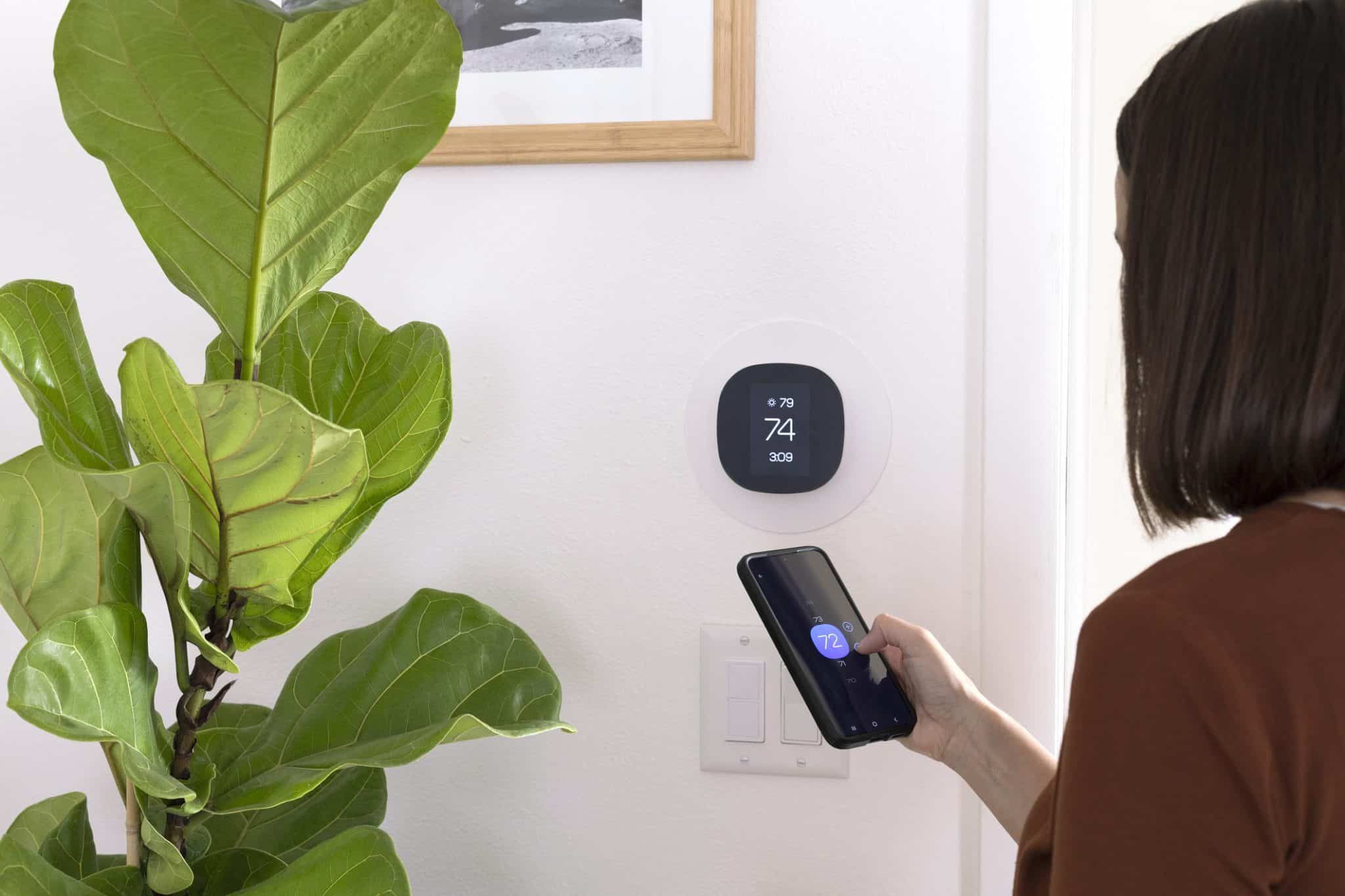
Smart thermostats do more than just set a temperature. They learn your schedule, respond to your location, and give you full control from your phone. For St. Charles and St. Louis area homeowners already dealing with warm, humid summers and cold Missouri winters, that kind of precision can make a meaningful difference on your Ameren Missouri bill.
At a Glance:
- Heating and cooling make up 45–55% of a home’s total energy use
- ENERGY STAR-certified smart thermostats save an average of 8% on heating and cooling costs
- Smart thermostats learn your schedule and adjust automatically, so you’re not heating or cooling an empty house
- Geofencing uses your phone’s location to trigger temperature changes before you get home
- Professional installation ensures compatibility with your existing electrical system
What Makes a Smart Thermostat Different
A standard programmable thermostat does what you tell it to, nothing more. A smart thermostat adapts. Most models connect to your home’s Wi-Fi and pair with a smartphone app, so you can adjust your home’s temperature from anywhere. Forgot to turn down the heat before a weekend trip? Fix it from the road.
Many of the best smart thermostats also include learning algorithms that build a schedule around your habits automatically. After a week or two, the thermostat knows when you wake up, leave, come home, and go to bed, and it adjusts without you programming anything.
What is geofencing, and how does it work with a smart thermostat?
Geofencing uses your smartphone’s location to trigger temperature changes. When you leave and cross the boundary you’ve set, your thermostat shifts to an energy-saving mode. When you head back, it starts returning your home to your preferred temperature, so it’s comfortable when you walk in. For households with unpredictable schedules, it’s one of the most practical features available.
The Energy Savings Are Real
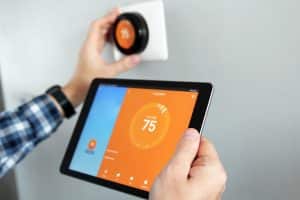 According to ENERGY STAR, smart thermostats save an average of 8% on heating and cooling bills, about $50 per year for the average household. That figure comes from independent verification, not manufacturer marketing.
For Missouri homeowners, those savings carry extra weight. The average monthly electricity bill in Missouri runs around $137, with heating and cooling driving the bulk of that during peak seasons. Consistent scheduling and geofencing reduce the hours your HVAC runs unnecessarily, which also means less wear on your equipment. Smart thermostats pair naturally with other efficiency steps, like hunting down the energy vampires hiding in your home.
Will a smart thermostat work with my existing HVAC system?
Most modern smart thermostats work with standard central heating and cooling systems, but older homes, heat pumps, and zoned systems may need a C-wire, an adapter, or extra configuration. A licensed electrician can confirm compatibility and make sure everything is wired correctly before the thermostat ever turns on.
Pro Tip: Before buying, pull your current thermostat off the wall and look for a wire on the terminal labeled “C.” Many smart thermostats need that common wire for continuous power. No C-wire doesn’t mean no smart thermostat. Your electrician can run one or install an adapter.
Features Worth Paying Attention To
Not every smart thermostat is built the same way. Here’s what matters most for Missouri homeowners.
Learning capability sets higher-end models apart. Brands like Google Nest and ecobee build a schedule by observing your behavior instead of making you program one.
Energy usage reports show how much your HVAC system ran and when. That data helps you spot patterns, understand your bill, and catch issues before they become repair calls.
Smart home integration lets your thermostat work with your lights, locks, cameras, and voice assistant if they share a platform.
Remote sensors help in larger homes. A thermostat only reads the temperature where it’s mounted, and sensors in other rooms give a more accurate picture for both comfort and efficiency.
Why Professional Installation Makes Sense
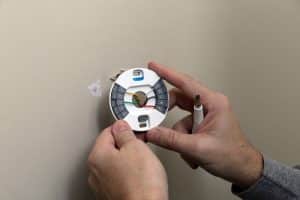 Smart thermostat installation looks simple: remove the old unit, connect a handful of wires, and mount the new one. But variables like wire compatibility, system type, and panel configuration can send a DIY job sideways quickly.
The U.S. Department of Energy notes that correct installation and proper use determine whether a thermostat actually delivers its promised savings.
At J. Bathe Electric, our team trains at the Electrical Industry Training Center and has spent over 80 years working on residential electrical systems across St. Charles, O’Fallon, Chesterfield, St. Peters, and the greater St. Louis area.
We’ll assess your wiring, handle compatibility issues, and install your thermostat as part of a broader smart home upgrade if you want to go that direction. If your system needs a panel upgrade to support new technology, we handle that too.
A Simple Upgrade With Lasting Impact
A smart thermostat is one of the most accessible home upgrades you can make. The upfront cost is reasonable, installation is quick, and the benefits show up right away: lower bills, better comfort, and more control over your home’s energy use. It’s also a natural first step toward a more connected home.
FAQs: Smart Thermostats
Do smart thermostats really save money on energy bills?
Yes. ENERGY STAR independently verified that certified smart thermostats save an average of 8% on heating and cooling costs, or about $50 per year. Savings grow when you use scheduling and geofencing consistently.
What’s the best smart thermostat for a Missouri home?
It depends on your HVAC system and smart home setup. Google Nest and ecobee are consistently top-rated for learning capability and integration. A professional assessment before you buy ensures the model you choose actually works with your system.
Can I install a smart thermostat myself?
Some homeowners do, especially with newer, standard wiring. But older systems, heat pumps, and multi-zone setups can complicate things quickly. Professional installation removes the guesswork and protects your HVAC equipment from wiring mistakes.
Schedule Your Smart Thermostat Installation with J. Bathe Electric
- Bathe Electric serves St. Charles, O’Fallon, St. Peters, Chesterfield, Ballwin, Florissant, and the greater St. Louis area. Call us at(636) 689-5085 or contact us online to get started.
Related Posts