A home electrical inspection covers your panel, grounding, GFCI and AFCI protection, outlets, wiring condition,…
Where Should Smoke and Carbon Monoxide Detectors Go in Your Home?
The Consumer Product Safety Commission estimates that 59% of non-fire CO deaths involving consumer products between 2020 and 2022 happened in November through February, right when furnaces fire back up. Those are staggering numbers, but the good news is that smoke alarms save lives.
Here’s how to handle smoke detector installation, choose between hardwired and battery models, and spot alarms that have expired.
At a Glance:
- Smoke alarms belong inside every bedroom, outside each sleeping area, and on every level.
- CO alarms belong outside sleeping areas and on every level of the home.
- Hardwired, interconnected alarms sound together, so a basement fire wakes the whole house.
- Replace smoke alarms 10 years after manufacture and CO alarms on the manufacturer’s schedule.
Where Smoke and Carbon Monoxide Detectors Go in Your Home
Smoke alarms catch fires early, so they go where people sleep and on every floor. CO alarms warn you about a gas you can’t see or smell, so they belong near bedrooms, where a leak is most dangerous while you’re asleep. NFPA’s smoke alarm and carbon monoxide guidance back both rules.
| Location | Smoke alarm | CO alarm |
| Inside every bedroom | Yes | Just outside the door |
| Hallway outside sleeping areas | Yes | Yes |
| Every level, including the basement | Yes | Yes |
| Kitchen | Keep about 10 feet from the stove, or use a heat detector | Keep out of the kitchen |
| Garage | Heat detector, not a smoke alarm | Follow the manufacturer’s placement rules |
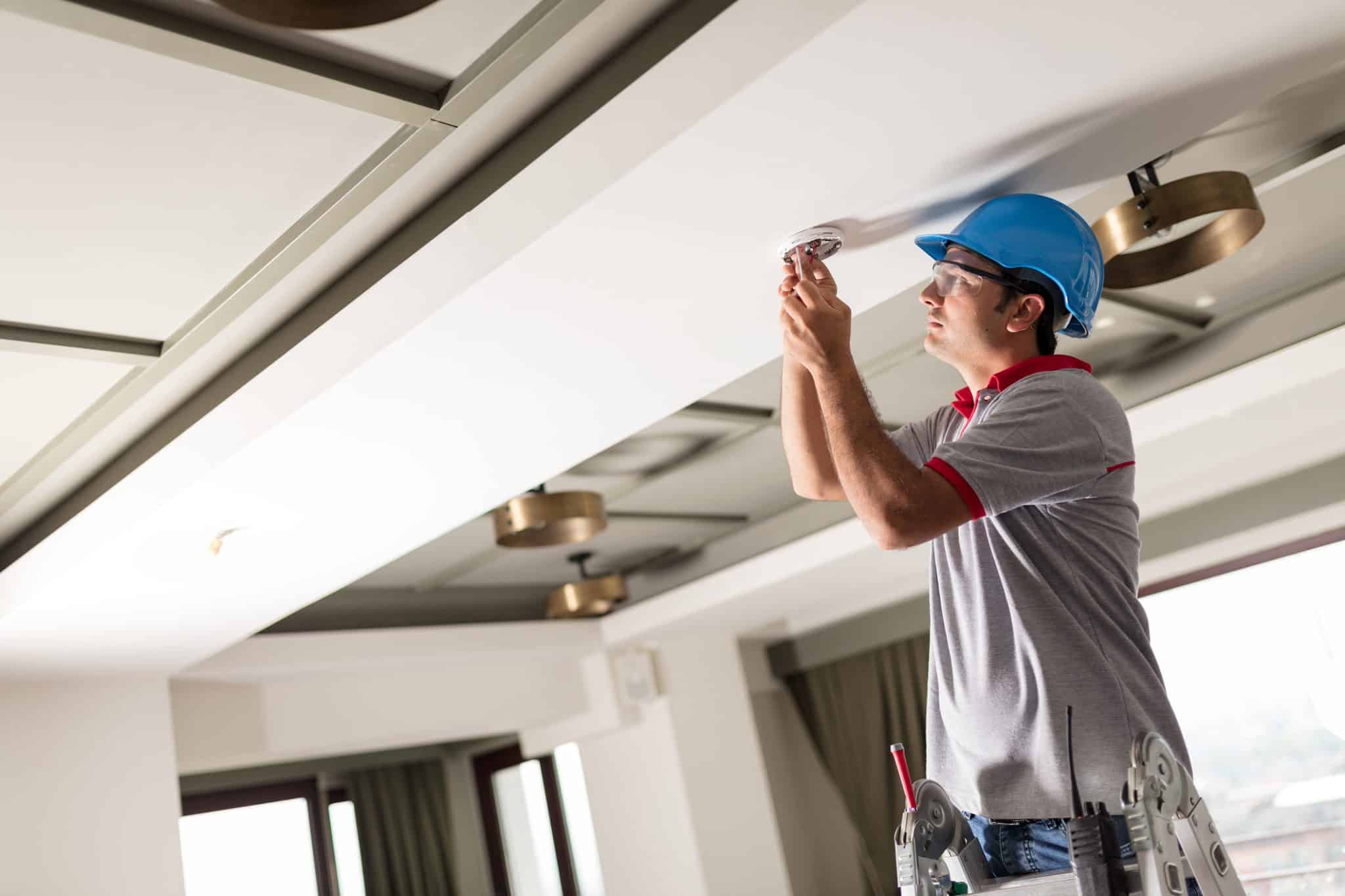
Mount smoke alarms on the ceiling at least 4 inches from the nearest wall, or on a wall between 4 and 12 inches below the ceiling. Heat detectors handle kitchens, attics, and garages, where steam, dust, or exhaust would set off a standard smoke alarm. For CO alarms, follow the manufacturer’s spacing from furnaces and water heaters.
Should I buy combination smoke and CO alarms?
Combination alarms work well in hallways and bedrooms because one unit covers both hazards and keeps your ceilings less cluttered. Pick a model with a voice or distinct tone, so you know which hazard triggered it.
Hardwired vs. Battery: Why Interconnected Smoke Alarms Win
Battery-only alarms are simple to install, but each one acts alone. If a fire starts in the basement while you sleep upstairs, the alarm outside your bedroom stays silent until smoke reaches it. Hardwired alarms tie into your home’s electrical system and interconnect, which is why NFPA recommends interconnected smoke alarms: when one sounds, they all sound.
| Feature | Battery-only | Hardwired with backup |
| Installation | Simple, no wiring | Needs an electrician |
| Interconnected | Standard models act alone | Yes, all sound together |
| During an outage | Runs on its battery | Runs on its backup battery |
| Replace the alarm | Every 10 years | Every 10 years |
That’s why we, at J. Bathe Electric, recommend hardwired, interconnected alarms most often when we find older St. Charles-area homes still running on stand-alone battery units. Most new battery-only models now ship with sealed 10-year batteries, which ends the midnight low-battery chirp but not the isolation problem.
Do hardwired smoke alarms still need batteries?
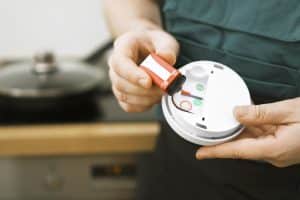 Yes. The backup battery keeps a hardwired alarm working during a power outage, so test the alarm monthly and replace the battery on the manufacturer’s schedule. The alarm itself still expires 10 years after its manufacture date, so check that date, too.
When Your Smoke and CO Detectors Have Expired
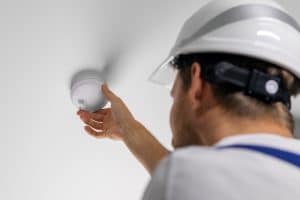 Smoke alarms expire 10 years after the manufacture date on the back, not the day you bought them. Sensors wear down with age, so an old alarm can pass the test-button check and still miss smoke. CO alarms carry their own end-of-life date, usually after five, seven, or ten years, depending on the model.
Make an alarm check part of your routine when the clocks fall back. Press every test button, listen for chirps, and read every date. Replace any smoke alarm that’s 10 years old and any CO alarm that’s past its end-of-life date. During any service call, J. Bathe Electric checks the manufacturer’s date on every detector in your home and flags the ones due for replacement.
Alarms back up good maintenance. They don’t replace it. EPA recommends having a trained professional inspect furnaces and other fuel-burning appliances at the start of every heating season, so book that inspection before the cold sets in.
How J. Bathe Electric Handles Smoke and Carbon Monoxide Detector Installation
The electrician who mounts your detectors is trained at the Electrical Industry Training Center and works for a four-generation family company with more than 80 years of experience serving the St. Louis area.
Our licensed, background-checked crew handles every smoke and carbon monoxide detector installation in-house, with no subcontractors, across St. Charles, O’Fallon, St. Peters, Chesterfield, Ballwin, Florissant, and St. Louis.
Every visit starts with a walkthrough of each bedroom, hallway, and level to count what you need and spot gaps. We confirm the circuit can support interconnected alarms before we run any wire, and we flag a panel upgrade early if your panel can’t handle the load.
Then we match each alarm to its spot instead of installing one type everywhere. Photoelectric alarms catch slow, smoldering fires sooner, ionization alarms respond fastest to fast-flaming fires, and combination units cover smoke and CO in one device. Kitchens and garages get heat detectors, so steam and exhaust don’t cause false alarms.
From there, we wire interconnected units and test the whole system before we leave, including a check against NFPA 72 and the codes that apply at your address. Buying or selling a home? A home electrical inspection reviews your alarms along with your panel, outlets, and wiring.
Home Electrical Safety Starts With Alarms That Work
Smart placement, interconnected alarms, and fresh manufacture dates cover most of what keeps a household safe from smoke and CO. None of it takes long, and all of it matters most once St. Louis winters settle in.
Smoke & Carbon Monoxide Detectors
How many smoke detectors does my home need?
At minimum, one inside every bedroom, one in the hallway outside each sleeping area, and one on every level, including the basement. Larger homes, finished attics, and open floor plans usually need more.
How often should I replace smoke and carbon monoxide detectors?
Replace smoke alarms 10 years after the manufacture date on the back of the unit. Replace CO alarms on the manufacturer’s schedule, which usually falls between five and ten years depending on the model.
What should I do if my carbon monoxide alarm goes off?
Get everyone, pets included, outside into fresh air right away, then call 911 from outside. Don’t go back in until responders say it’s safe. Afterward, have a qualified technician inspect your fuel-burning appliances before anyone resets the alarm.
Book a Smoke and CO Detector Check Before Winter Hits
We serve St. Charles, O’Fallon, St. Peters, Chesterfield, Ballwin, Florissant, and the greater St. Louis area. Call us at (636) 242-8210 or contact us online
Call us at (636) 242-8210 or contact us online, and we’ll count, test, and replace every detector that needs it.
Related Posts